Follow Me on Twitter

Music Industry Jobs|Music Business Jobs|Music Internships

The net’s oldest music business advice site.

Archive for the ‘Doc's Favorite Posts’ Category

If you're new here, you may want to subscribe to my RSS feed. Thanks for visiting!

Recording Engineering Degrees in Emeryville California

Those of you who follow the page, know that I’m big on education. And while that might seem to be a surprise to some who knew me as a kid, it’s always been true, really, it’s just that my insatiable curiosity wasn’t always directed toward what is taught in school.

My guess is, that if you’re hear reading this, you often find yourself in the same boat, so from time to time, I like to cover some of the music and engineering schools out so you’re informed as to what music business education options are available to you.

Today, I wanted to take a quick look at Ex’pression College of Digital Arts in Emeryville, California. Emeryville is home to Pixar Studios and is a stone’s throw from Berkeley and San Francisco. Yeah!

Ex’pression offers Bachelor’s Degrees in a number of disciplines including: Sound Arts, Game Art and Design and Motion Graphic Design.

From the Ex’pression website: “Expression’s Sound Arts Program provides students with the knowledge and skills to help shape the cutting edge of audio design and creation. The focus is hands-on experience needed to land audio and music engineering jobs, and access to digital audio equipment and software. Training in the Sound Arts Program at our school prepares students for the challenges of music recording, audio engineering, audio post-production for film and television, video games, live sound, MIDI production, studio management, and multi-media non-linear editing. Learn to use leading edge music and audio production software, such as Pro Tools.”

MusicBusinessPage.com has partnered with Ex’pression to allow our readers fast and simple access to their free information kit. You can learn more about their Sound Arts, Motion Graphics or Game Art and Design by filling out this super-quick form. Maybe you’ll end up working at Pixar!

Here are a few of Ex’pression’s famous alumni and faculty:

  • Spencer Nilsen (School President) - Video Game Music Composer
  • John Scanlon (Sound Arts Program Director) - Sound Engineer
  • Yael Braha (Motion Graphic Design Program Director) - Graphic Designer, Filmmaker
  • Jack Douglas (Teaches Studio Etiquette) - Record Producer

Like most other schools offering recording engineering degrees or Bachelor degrees in the music business, Ex’pression College for Digital Arts has a rolling admissions policy, which means that instead of thinking you have to wait until fall to go to school, they’ll take your application now. And in my book that’s a great deal.

To learn more about any of the Ex’pression degree programs and receive your FREE information packet for each program, request info on the next page, and click SUBMIT. You’re only as close to your dream as the action you take. Get started on your dream career today and lay down some thumpin’ beats at Ex’pression College for Digital Arts, today!

More music business degree programs are available at the below schools where you can:

Learn video production by the beach at sunny Platt Media Arts College, San Diego
Rock out with the cats at Video Symphony TV & Film School in Burbank, California
Hang your hat with legendary songwriters in music city at International Academy of Design & Technology

Special thanks to all of our college sponsors, including Ex’pression, for helping to sponsor MusicBusinessPage and keep our great content alive for yet another generation of aspiring music business professionals!


Music Business Myth Busting

Image courtesy of: Self Service World

One of the most prevalent myths you’ll ever hear about working in the recording industry, is that your likelihood of carving out a career in entertainment rests solely on who you know. In fact, this kind of talk permeates all facets of job hunting and sales to the point where, God-forbid, one might think it completely impossible to accomplish just about anything in life without some sort of inside connection.

Well, while an inside track to a gig as a recording engineer, or record promotion person might be a beautiful thing, and save you a ton of work, it is without a doubt NOT the only way to start or continue your job in the music business.

Let’s say, for example that you would like to work in a studio as a recording engineer. If your uncle’s best friend’s cousin owned a studio, then you’d be in like Flynn, right? But what if you didn’t know anyone? How would you get started sweeping up the floors of a recording studio and miking drums without knowing someone? How would you even find a studio to start your search?

Well, here is what I would do, and if you follow these few simple steps, you’re bound to have some results.

First, hop online and do some searching for where there are recording studios in your town, or nearby where you live. If you feel you’re stuck in a town with absolutely no music scene and there isn’t a studio around, then you might want to read my initial Music Myth Busting Post: “My town is too small to get a job in music.” In there you’ll see how I break apart this myth once and for all by highlighting a ton of opportunities in what is statistically the smallest town in America. It might open your eyes a bit as to what sort of career opportunities in the music industry exist in even the tiniest of towns anywhere in the world.

So, back to our dream job of working in a recording studio. . .the next ProTools master!! Okay, so your dream is probably to either run a studio someday or work with artists in the studio as a producer or some sort of tech. My guess then is that you’re already somewhat familiar with what that job entails, but if you’re not, or if you would like to learn a bit more before you start to dedicate your valuable job/internship time searching for something that you might not enjoy, you might want to pick up a copy of what are probably the two best books on what it’s like to be a record producer and work in a studio day in and day out. The two books I would recommend are: Confessions of a Record Producer, by Moses Avalon, and Producing Hit Records: Secrets from the Studio, by David Farinella. They’re both brilliant insider books on a recording career.

Once you’re sure you’re set for a career as a recording engineer, or record producer follow these steps, and watch the magic start. Heck, it’s what I’d do, at least, and you’re results are only guaranteed by the time you put into it. When I was first starting and looking for my first college internship at a record label, I sent over 100 resumes out to the labels with a cover letter stating my interest in working with them and rattling off the experience I already had working for two years as an intern at WZZO radio in Allentown, PA. ‘ZZO is no piddly-ant station, yet despite this effort, and Lord knows how much money to have each cover letter typed (yup, this was a while ago. . .), it yielded only ONE single call. Which led, however to ONE single job. Yeah! I heard back from Sony, Crysalis, EMI, Capitol and a host of other record labels that they didn’t need my help, but one label. . .Virgin. . .got back to me, and that ONE single gig (after tons of energy) was the gig that sparked my career.


I mention this because I want you to know that no amount of wishing is going to help you get that music job. . .you’ve got to take some action. And remember, it’s NOT who you know. I didn’t know a soul at Virgin, and no one at my radio station vouched for me either. It was ALL hustle.

Okay, here are the steps as I would pursue it if I were looking for a job in a recording studio today.

  1. Read the aforementioned books to be sure I wanted this type of gig.
  2. Create a resume that highlights at least some of the experience I’ve already got. (This can be anything. . .even a mere love of music CAN get you places if you apply it logically for whatever job you’re trying to get. . .alas, you’re much better off if you’ve been in a band, worked with a band, have a home studio, recording stuff using some sort of MacGyver set up in the woods. . .whatever. . .just demonstrate your initiative.
  3. On your resume, skip the references section, and play like the big-boys and gals do. Include “testimonials” instead. These are written references from your bosses. So, instead of merely placing your boss’s name and number down, get him/her to write something say why you’re awesome, and put THAT in there!! No one your age will be doing this. . .trust me.
  4. Create a personalized cover letter. My advice here, is don’t get too carried away. MOST of these will not be read, and if you spend too much time crafting great letters for 100 people, you’ll never get anything done. Try to write a cover letter that speaks as directly to the studio you’re trying to get work at, while at the same time crafting it in a way that allows you to put it in a mail merge program for maximum productivity.
  5. If you’re not great at resume writing you can use any number of services out there that provide such a service. Folks like Employment 911 (who write music-specific resumes) and Resume Rabbit are good in my experience. You might also find folks who do this sort of thing locally and in-person. (In the interest of full disclosure, I do receive a commission if you happen to work with these folks.)
  6. Search online using Google’s business search to find the recording studios near you. If you’re going to be a recording engineer, you’re going to have to know where the business is at. So drum up a list and create an excel sheet with all the pertinent data that you can later import into your favorite letter writing program for a mail merge.
  7. Once you’ve got your list and your resume ready, stamp ‘em and send out the letters. Send them out in manageable bunches, because the most important step comes next, and you’ll want to leave enough time in your day to complete it successfully.
  8. Here it is. The most important step. Pick up the phone and call the people you sent your resume to. I guarantee you most, if not all, people who send out resumes to recording studios will never do this step. Call it what you will, cold-calling. . .warm-calling. . .whatever, it’s gotta’ be done if you want to score that job. If I had done this earlier in my career, I’m sure I would have had even more success than I initially had at the time. So, please pick up the phone. . .introduce yourself, and tell them why you want to work with them. This, by the way, is the stage where you’ll want to know more about how each studio works and who they work with. . .if you know what you’re talking about when you call, you’re two steps ahead of the game.
  9. Rinse, lather, repeat. Keep going. If you call and get no response. . .voice mail. . .leave a message. If you leave messages and no one ever calls you back, try putting a date when you’ll call in your cover letter. If you do that and it still doesn’t work, when you leave a message, ask if they can return your call with a good time to call them. If that doesn’t work, locate their address and show up at their door. I’m not kidding. Just go there. Again, most folks won’t do this. When I interned at ‘ZZO I dropped off my resume personally even though the person I was dropping it off for wasn’t there. Then I followed up with a phone call. In showing up and later calling, not only did I demonstrate a little chutzpa, but I also knew the receptionist’s name as well as the name of the person that just happened to cover for her when I came in for lunch. Ah, I hear you saying, “Now you knew someone!” Yup. But not at first! But with a little hustle you can do the same.

This system does work if you put a plan into action. Case in point of hustle in action: My new pal, Justin Travis. . .graduate of the Berklee College of Music and now intern at TopSpin. A month or two ago, Justin started following my MusicBizJobs account on Twitter. And like most folks, he was just “out there” in the stream. Yet one day I saw a tweet of his where he asked for folks interested in creating a podcast with him about the goings on in the music business.

Well, heck, I didn’t know Justin from “Adam,” but, it sounded like a solid idea, so I said I was “game” if he still needed the help. He did, and I was in. Now the MusicBizWeekly podcast is a weekly occurrence, and I even dragged my long-time compatriot, Heather McDonald from Musician’s at About.com in for the fun. The best part is, though, Justin took the initiative as he saw it to literally create a name for himself. Great idea, and SO do-able these days with the simplicity of blog writing and podcasting, etc. Just creating good content can get you noticed these days. . .in the 80’s and prior to that these options were not even possibilites, so the advatange is truly yours.

What’s even better about Justin’s story though, is that when I first spoke with him he wanted to land a job in LA. A good place to be for someone looking to work in the music industry, right? Well, damn, Justin didnt’ know a soul in LA, how could he land a 3 month internship with a new media/new music firm in just a month or two, without knowing anyone? Hmmm…well, how about majoring in music business at a great school? How about interning while in school instead of drinking beer every night and failing out? How about researching the places online where he would like to work, then hustling to get his foot in the door with a resume, follow-up and an eventual interview? How about putting together a MusicBizWeekly podcast with two veteran music people to show your initiative?

Clearly, you must see where this is going, right? Correct. Justin will soon be moving to Los Angeles to start what will, no doubt, be the beginning of a great career in the entertainment industry at what was his first-choice company as far as I know: TopSpin. Awesome-ness, made real by H.U.S.T.L.E!!

Go get ‘em. It is NOT who you know. It’s ACTION that makes your dream gig possible!

See you at the meet and greet! ™

Cheers,
Doc

If you like the blog, you’ll love our email newsletter even
more. Subscribe to the Music Business Page Blog by Email today, and get your complimentary “Music Business Boot Camp” series, the introductory chapters of my Music Business Guidebook, and our 50+ page BOOK: “Tips, Tactics and other for-sure methods for getting your music career off the ground” each delivered free to your email box instantly as a courtesy just for signing up today. Don’t forget to approve the confirmation email, and please note: ONY email

subscribers will receive these extra gifts. RSS subscribers will still receive updates about the blog, email recipients will receive the extra benefits mentioned above. If it was us, we’d subscribe to both!

Sell your records. Find a gig. Learn more.


Clear Channel kills 9% of it’s workforce. Advantage, YOU!!

Posted by dockane On January - 22 - 2009

Hi everyone, just popping in today with a quick video that’ll start your mind racing with all sorts of approaches you can use to snag your first radio job this week. No kidding, watch the vid and get movin’!

Here are the links mentioned in this video:

Clear Channel’s station search tool. Good if you know the call letters, otherwise, not so good!

Wikipedia list of seemingly every Clear Channel Station by state

Knock ‘em dead, and I’ll see you at the meet and greet!

Cheers,
Doc


Part One:

There’s one star in this video, but there are hundreds of music industry stars who make Pink LOOK like the only real star in the room. Which one are you? Take a look at this video, the song will always rock, but I also would suggest taking a look at it with a keen eye on the types of music jobs that exist within every element of the production.

Do you see ‘em? There are TONS of things going on here and TONS of jobs for those of you who are seeking a career in entertainment. As I mention in my book, music isn’t just about promotion, publicity and artist management. There are SO many opportunities in music its insane really. . .so please don’t limit yourself to the few that are the most apparent. I’ve listed out just a few of the music jobs I see in this video:

Grips
Riggers
Lights
Dance Coordinator
Sound
Production
Licensing
Promotion
Art Direction
Session/Touring Musicians
Acrobatic Training
Video Production
. . .and tons more. . .

Always keep a keen eye open when looking at movie and video credits. . .look at the job titles and think about what it is you might want to do as a result. If you’re a musician, look at what it takes to be a session musician, if you’re a designer and love music look at costume and stage design. The possibilities are endless, really.

Part Two: Okay, so I wanna’ get the party started here on the page as well. For some time now I’ve been blogging about what I think you want to hear, now I would love to hear what it is you want me to write about. I’ve got a lot of contacts and ideas to share, so fill me in. What do you want to know? What careers are you interested in? I’ll highlight the things you want to know about so everyone benefits. How about descriptions of what certain jobs are like. . .a “day in the life”,or something like that? Give me some feedback in the comments section and we’ll be off and running. (scroll to the bottom to see the comment form after you click on the link!)

This page will really start to hum if I can get some community feedback!

The Bribe: For those of you who submit AT LEAST three ideas, you’ll be eligible for a bit of a prize. Once we’ve tallied all the ideas, I’ll pick a winner at random, and offer a free half-hour consultation with me to ask anything you want about the music business! Ask anything you can dream of. . .but you’ve gotta’ submit AT LEAST three suggestions first! (scroll to the bottom to see the comment form after you click on the link!)

Good luck!!

Doc

Check out our new Music Industry Jobs and Internships board at MusicIndustryJobs.com It’s FREE!

If you like the blog, you’ll love our email newsletter even more. Subscribe to the Music Business Page Blog by Email today, and get your complimentary “Music Business Boot Camp” series, the introductory chapters of my Music Business Guidebook, and our 60+ page BOOK: “Tips, Tactics and other for-sure methods for getting your music career off the ground” each delivered free to your email box instantly as a courtesy just for signing up today. Don’t forget to approve the confirmation email, and please note: ONLY email subscribers will receive these extra gifts.

RSS subscribers will still receive updates about the blog, email recipients will receive the extra benefits mentioned above. If it was us, we’d subscribe to both!

Check out our new Music Industry Jobs and Internships board at MusicIndustryJobs.com It’s FREE!

Howdy, folks. I’ve finally taken the step of creating some video content for everyone using some of the many new tools I love to play with on a daily basis that help me retain my productivity goals. So, for this first tutorial of sorts, I’ll walk you through some of the better ways to search for things using Google.

Just by looking at the analytics for the site’s visitors it’s easy to see that many of those who land on the site do so by using “general” search techniques in Google. This is fine for really generic searches, but for the types of searches you really should be doing to help you find a career in entertainment, general searches are not enough. So sit back and enjoy (hopefully!) this quick little lesson in advanced Google search techniques for your job search and employ some of them this week as you’re looking for a gig. I’m sure it’ll help to some degree.

I look forward to your comments. . .this is my first attempt using such a tool! If my broadcast is a bit slow let me know as well, but keep in mind that if I talk too fast the program won’t keep up with my mouse movements. It’s instructional, so it’s supposed to be a bit drawn out. At least you can fast forward!! Cheers, Doc


Tune-up your resume and get a Christmas Job fast


If you like the blog, you’ll love our email newsletter even more. Subscribe to the Music Business Page Blog by Email today, and get your complimentary “Music Business Boot Camp” series, the introductory chapters of my Music Business Guidebook, and our 60+ page BOOK: “Tips, Tactics and other for-sure methods for getting your music career off the ground” each delivered free to your email box instantly as a courtesy just for signing up today. Don’t forget to approve the confirmation email, and please note: ONLY email subscribers will receive these extra gifts.

RSS subscribers will still receive updates about the blog, email recipients will receive the extra benefits mentioned above. If it was us, we’d subscribe to both!

So what does Kid Rock think about illegal downloads?

Posted by dockane On July - 23 - 2008

Here is the link to YouTube. Damn these folks that aren’t allowing embeds! Argggh: http://www.youtube.com/watch?v=KUgB0hNf0bs

I couldn’t agree more.
Thanks for the forward, Mike!!

Check out our new Music Industry Jobs and Internships board at MusicIndustryJobs.com It’s FREE!


Music Business Mtyh Busting

No matter where you live, you can get a job in the music business.

Image courtesy of: Self Service World

Check out our new Music Industry Jobs and Internships board at MusicIndustryJobs.com It’s FREE!

Last week I was having lunch with a college-aged friend of mine, and while our meandering conversation took many turns over the course of an hour, a big part of it centered on music. If you know me, you’ll know that this is a common diversion, and it’s easy to make the leap to music as I find it is a great icebreaker in any conversation. Generally speaking, even if people have nothing to talk about, they enjoy talking about music.

Even growing up, I remember music tended to define who we were in a sense. . .and it was almost the very first question you would ask in a conversation. “So, what kind of music do you like?” It was the schoolyard demographic identifier. Every click had their own tastes in music and, to a degree, you knew where you fit in, based on what folks were listening to. Of course, there were, and still are, crossover acts that hit all crowds, but it was a pretty good rule of thumb. Isn’t it funny, how that question of what kind of music you dig morphs into the: “So, what kind of work do you do?” question we all ask as we exit college and enter the working world. Ah. . .how much better it would be if we stuck to the first question. . .then followed it with: “And how is your family?” Anyway, wishful thinking. . .we’re so detached from what really matters anymore on the whole, I think.

Regardless, this conversation about music started because my friend was playing some funky tune on his iPod that I had never heard of, and so I asked who it was. . .that, in turn, led to the remaining free flow of conversation that concluded with us talking about a few friends of his who also dig music, one of whom even went to engineering school, but can’t seem to find jobs in the business and are now living at home working in retail. Eh? What a drag. So, of course, the former academic advisor and music business vet in me perked up. I asked. . .”What sort of work do they want to do?” His reply, “Not sure, but they say they just can’t get anything.”

Hmmm. . .okay folks, so it’s time for me to pull out my pedestal a bit, because this advice is critical to your success. And, if I sound like I’m preaching to you, I am. But take it with a grain of salt, because if you take my advice to heart, you’ll be thanking me later. Here goes.

First of all, not knowing what kind of job you want in the music industry is insane. There are so many books about the business, so many people talked about these days on the news and all the entertainment shows, that it’s a wonder you don’t have five or ten jobs you think you could do. Come on, really. Let’s get some focus! Second, I will never accept that there are “no jobs” in music for those first out trying. It is just NOT true. The music business is full of people who are where they are today because they have dedicated their lives to working in this business, and most, if not all of them started out as volunteers. If you’re not open to volunteering to get your feet wet, then you might as well start looking for a career elsewhere. Whether it makes sense or not, people who work in music often consider it a badge of honor to have worked for free, and with all the people willing to work for free to get started, if you’re the one out there looking for a paying gig with zero experience under your belt, who do you think they’ll hire? Even the Beatles put in extra “free” hours in Hamburg when they were getting started.

And hey, I don’t care if you live in the most podunk town on earth. There are opportunities to get your start in every town.


According to census records, Dellview, North Carolina is the smallest incorporated town in America, with only 11 residents, most of whom are related. Now that’s a small town. However, to its immediate north is a town named Cherryville, with upwards of 6,000 people. And low and behold, Cherryville has a music instrument store (McNeely Music and Sales), bars (with live bands so you can roadie, do lights/sound), The Iris Room an event/wedding reception room (can you say DJ??) , at least one record label in Almost Standing records, and all these additional music oriented businesses within a half hour of the town. It’s ridiculous really, more than even I thought I would find! Then, of course, if you’re really determined, and want to make an impression. . .only one hour from Dellview, the smallest town in the entire United States of America, is the Charlotte-Mecklenberg region where in Charlotte alone there are 705 listings just for recording studios!!!! Imagine what else is there. If you can’t get a job sweeping floors and filling pencil boxes for free with 705 options then. . .wow. . .

Look, it takes effort, folks. Sometimes climbing the ladder is tough, and sometimes it can be a breeze if you get lucky. Sometimes the money is good, other times, its slow in coming and often low at best. But there are plenty of other professions that have the same kind of sacrifices. Do you think doctors enjoy working 20 hour shifts and sleeping in locker rooms for a few years before they get to actually practice? How about architects? Almost ten years of schooling and apprenticeships before they even get a chance to sign off on drawings? Getting there is hard work, but for those who want it badly enough it’s all worth it. And don’t forget, it’s okay to stumble. . .you’re not always going to get it right just out of the gate, just dust yourself off and keep going.

Getting a job in the music industry, or in any business you really care about, is all about setting goals, being persistent and following-through. No one element stands alone. . .they all must work together, and they’re driven by your own desire and passion for whatever life goals you possess.

You can certainly toss each one of these elements out the window if you’re happy working in a job you don’t like that just “pays the bills,” but wouldn’t it be better if that job you had that paid the bills was also a job you loved? And, by the way, it certainly doesn’t have to be in music to be the right job for you. Maybe your life’s calling is helping people as a research librarian, or as the manager of a hotel, or owner of a nail salon. . .whatever it is, think about would make you happy, and do it. And to make sure you’re successful in your efforts, be vigilant about incorporating goals, persistence and follow-through in everything you do along the way. Do those things, know you can do it, and you’ll eventually figure out the path to success. Get a resume together, create a cover letter that opens doors, make yourself the fish they won’t want to toss back into the water. Do it now.

Please, no excuses! Get that gig!

If you like the blog, you’ll love our email newsletter even
more. Subscribe to the Music Business Page Blog by Email today, and get your complimentary “Music Business Boot Camp” series, the introductory chapters of my Music Business Guidebook, and our 50+ page BOOK: “Tips, Tactics and other for-sure methods for getting your music career off the ground” each delivered free to your email box instantly as a courtesy just for signing up today. Don’t forget to approve the confirmation email, and please note: ONY email

subscribers will receive these extra gifts. RSS subscribers will still receive updates about the blog, email recipients will receive the extra benefits mentioned above. If it was us, we’d subscribe to both!

Sell your records. Find a gig. Learn more.


Music Business School Spotlight: SAE Atlanta

Posted by dockane On July - 7 - 2008

SAE Recording Arts and Film ProductionOne of my great interests in life is learning about cultures different from my own, and when I was just beginning to get my feet wet with knowledge about the music industry, one of my more favorite sections to read in Billboard, was the International section. If you’re at all like me, and dream of yourself mixing records and working with bands in foreign lands, then you should take a look-see at the School of Audio Engineering (SAE), the world’s first school to offer “practical audio education” as SAE refers to it.

SAE Institute, the world’s largest media arts and sciences academy, operates 46 schools on four
continents, four of which are in the good old US of A. Today we’re going to take a quick look one of SAE’s more recent campuses: SAE Atlanta. Facilities at the SAE Atlanta location were built by world-renowned studio builder Michael Cronin of Michael Cronin Acoustic Construction, and occupy a 17,500-square-foot building above the Hard Rock Cafe in downtown Atlanta. The campus has more than 20 studios and workstations, including a 5.1 surround sound mixing theater featuring a Digidesign ICON control surface and ProTools HD system, housing the most advanced professional audio and multimedia technology
systems available.

Every new student receives an Apple laptop computer, audio interface, and Pro Tools M-Powered, BIAS Peak and Logic Express software to further enhance and encourage each individual’s educational experience.

Why I like SAE for its international vibe is that it is headquartered in Byron Bay, Australia and has a network of 47 campuses all over the world, opening up opportunities for study abroad, and international connections that almost never exist in traditional engineering school environments. If you’re at all interested in working overseas in the entertainment industry, I would encourage to take a serious look at SAE by requesting information about their schools.

SAE offers diploma and full degree programs in audio, multimedia, digital filmmaking, animation and gaming. SAE is part of the SAE Technology Group, which also owns and operates leading mixing console manufacturer AMS Neve, Studios 301 (with locations in Sydney and Byron Bay, Australia, Cologne, Germany, Studios 301 is a collective group of state-of-the-art recording and mastering facilities), the Computer Graphics College and Qantm College.

They have a rolling application deadline, which means that instead of thinking you have to wait until fall to go to school, they’ll take your application now. And in my book that’s a great deal.

To learn more about any of the SAE campuses and receive your FREE information packet about the school, fill your information in their quick form on the next page, and click SUBMIT. You’re only as close to your dream as the action you take. Get started on your dream career today and lay down some thumpin’ beats at SAE Atlanta

Learn recording engineering by the beach at sunny SAE Miami

Rock out with the cats at SAE Los Angeles

Hang your hat with legendary songwriters in music city at SAE Nashville


Entertainment Career Advice:  Questions and AnswersHow it works: Hi folks. Because I tend to get a lot of questions about how to get a job in the music business, and because it is difficult to craft a new response for every one I get, I’m going to start sharing a few of my more common responses here on the blog. Each time I do so, I’ll ask if I can post the message online before doing so, and if I receive your approval, as I did with today’s question, I’ll put ‘er up.

Today’s question comes from a reader interested in breaking “back” into the music business after interning several years ago. He initially asked about recruiting agencies in the New York area, which I also comment about briefly. Below is the text of a few emails back and forth with the names and places of the innocent removed for the obvious reasons, and as well as some of the extraneous stuff like the ‘”thank yous” and “hellos”

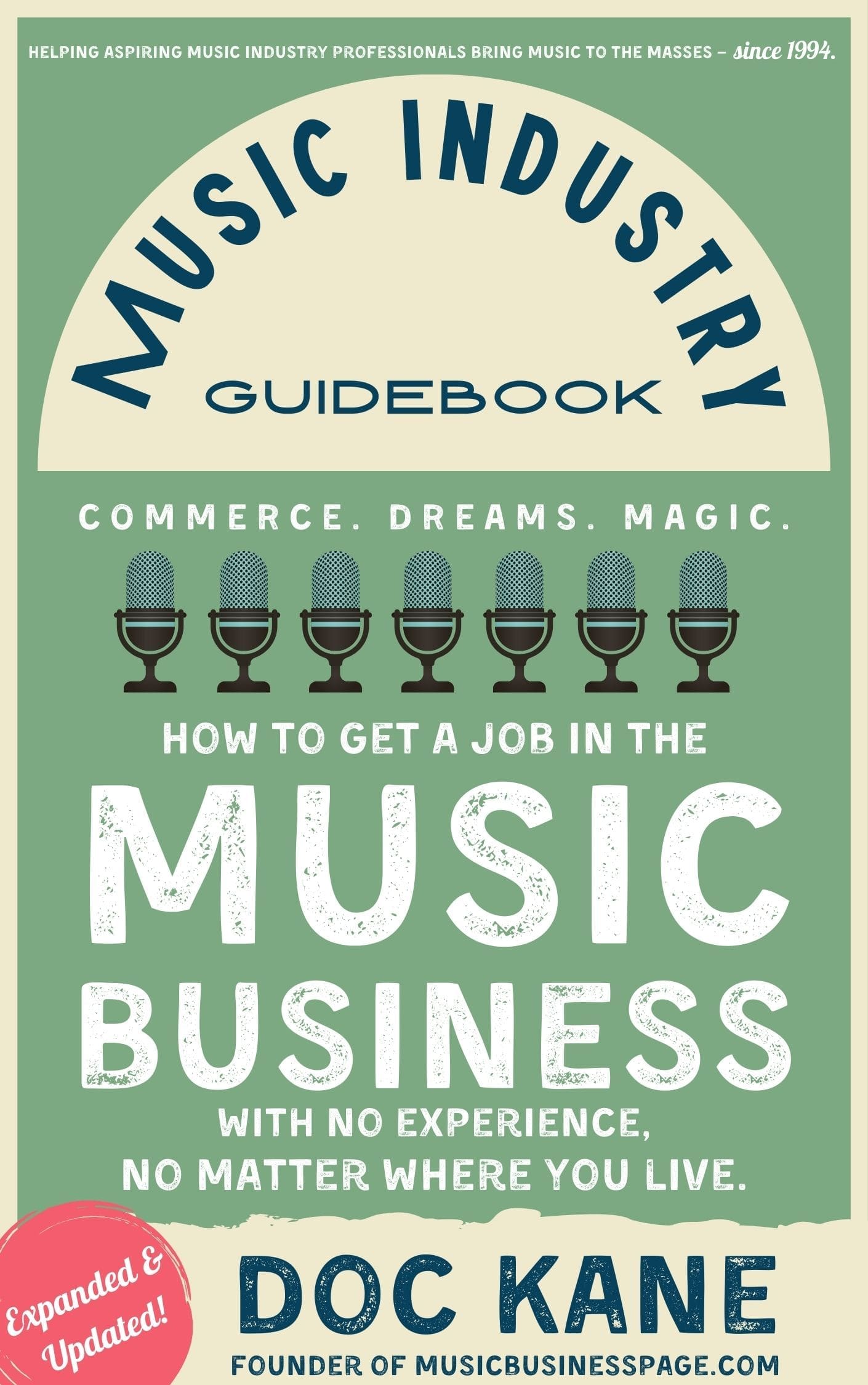
What sort of questions do you have about a career in entertainment? Place them in the comments section of this post. If your questions is chosen as our next “Reader’s Question”, I’ll send you a free copy of my book: “The Music Industry Guidebook: A clear guide to getting a job in the music industry. . .fast!”

First email volley from our intrepid reader:

“I’m currently looking for a job in music marketing/promotions. Do you know of any music industry recruiters based in New York? The recruiters that I have investigated so far do not help with promotions/marketing placements.”

My initial response:

“Thanks for the note. Recruiters in the music business are mostly for entry level admin jobs, unless you’re an exec already who needs an “agent”of sorts to help you get a bigger paying job. Can I ask what sort of work you do now? Are you a college grad, or still in school? And what sort of music you’re into?”

His second reply:

“For the past eight years I have been pursuing an acting career. While I have had success, I am now searching for a more traditional means of employment. I graduated with a Marketing degree from XYZ School in 1999. I also minored in Music Merchandising. My current job is as a customer service representative for XYZ Company. I’ve been working there for about a year and a half and still act as a hobby.

During college, I interned at Mercury Records and Roadrunner Records for a year each. I have had many jobs in street promotion, bar tending, administrative work and temping to supplement my acting income.

My present goal is to work in music promotions or marketing preferably in the heavy metal and rock genre. companies like Roadrunner Records, Sirius Satellite Radio, Revolver Magazine and Metal Maniacs magazine would be ideal. A place comparable to the now defunct Concrete Marketing and Concrete Management would be great too.

There’s nothing better than promoting music to people especially at events like concerts. The look on a person’s face after hearing a great band for the first time is priceless. I feel music is the impetus to bring people together in an increasingly isolated world and I thrive to make those connections.”

My second response:

“I like to shoot straight on these things, so here’s my take. First off, you’re lucky you’re be near NYC. By your area code, I’m guessing you’re in Long Island, so you’ve really got the music business right in your backyard. A lot of folks think rock music happens in LA, my opinion has always been that it’s really out East.

You’ve also already got experience in the business which is really good and can put you ahead of the competition for gigs.

The negative in this whole thing is that because the industry turns over so frequently, as often as every two to three years, many of the people you knew at Roadrunner and Mercury, and more importantly, the people THEY knew are most likely not working in music anymore, or are doing something not related to record promotion at least. I did independent promotion myself from 97-99 and probably know some of the folks you once worked with. Do you remember any names?

Question: after your internships with the labels why did you leave the business on the record side?
(he addresses this, later saying that he went to pursue a career in acting)

You mentioned Concrete. If I recall correctly, they were an independent promotion firm and are “no longer”, like many independent promotion firms, because the rules regarding indie promotion have changed, and the labels stopped paying most indies to do promotion the way they were doing it. What that means for folks interested in promotion, is that most of the real paying gigs are back “in-house” at the labels, and the labels can be hard to break into unless you’re starting from the bottom.

That said, since you’ve already interned you might be able to step your foot back in the door again at any of the labels you’re interested in as a volunteer/intern, and once you’re in and being recognized as a contributor, ask what the realities of becoming full-time staff are if you were to stay on as a volunteer. Many places will take interns of all ages. . .they might require credit. . .which you can get cheap at local community college, but it should still work. The main thing is you’ve gotta’ be willing/able to work for free again, which sucks, but might help get you back and rolling again. There are never any guarantees, but it’s a shot.

The other way is to take a look at any outlet in your area that plays the type of music you like. If you’re into metal, look for metal shows on the air (tv or radio) or the magazines you mentioned, and try to get a part-time or intern job there. Then you’ll want to aim to be someone the labels know and need to get their music played/reviewed. Once you’re that guy, then its MUCH easier to make the transition.

It can all involve starting over in a sense, and I’ll remind you that the turnover is high at labels, particularly in promotion as its a sales job. If you’re not sellin’ you’re not stayin’ is the mentality. If you’re a great salesman, then more power to ya!

I hope this helps a bit. If I were you, I would make a list of 10 places you think you would like to work. First go in with the idea of you’re looking for work, FT or PT. If that doesn’t work, THEN go for volunteer.

Radio doesn’t pay well, neither does journalism, records does pay well, but the lasting power is short. :-) Can’t win either way, eh? If I was independently wealthy, I would work in radio the rest of my life.

BUT, if you love it, then sometimes its worth it. I always recommend that people first think about WHY they believe they want to work in music, consider the realities of the business, then think again about how much they want it. If the pull is still there, then they’ll probably never stop dreaming about it. I’m that way in a sense too. . .most will say the bug never leaves you. Finding the happy medium is the best way. Once, I met a guy who was a major A&R guy in the 80’s and worked with Guns&Roses, and a host of Seattle bands. The band dynamics and deaths of a few notable artists in the Seattle scene whom he had known hit him hard.

He’s out now and working at a college advising students on classes (another job I’ve had). What he said to me one day when I was asking him why he didn’t want to go back to music has always stuck with me. He smiled a bit, looked me in the eyes and said: “Right now, I’m just happy being a fan.” And sometimes, he’s right. You’ll have to make that call for yourself. For me, being a fan only works for a short period of time until the “itch” returns.

Let me know if there is anything else I can do for you, and good luck!”

So, I hope this helps a bit, if you’re in a similar situation. If you’re not, and just starting out, there are nuggets in here as well! Don’t forget to send in your own questions by commenting on this post for your chance to win a copy of my book.

Disclaimer: Please keep in mind that this is my advice to this one person. It should not be taken as gospel, is certainly not the only way to tackle the dilemma, nor will following my advice guarantee any success.

Indeed has among the best job search technology out there. Type in music business and see what you get, then tweak it as necessary. It works like a charm!

Check out our new Music Industry Jobs and Internships board at MusicIndustryJobs.com It’s FREE!

what where
job title, keywords or company
city, state or zip jobs by job search


You bet your Casey-Kasem, Rick-Dees lovin’ asses it is.

Without a doubt, radio is still is among one of the more powerful mediums for introducing the majority of people throughout the world (don’t forget media exists outside the US, folks), to new music, news about musicians and bands on tours, and general entertainment industry revelry. Its almost always free, and accessible just about everywhere humans tend to populate.

(Heck, even my phone, a Sony Ericsson, is a phone/walkman. So, I can get radio on my cell phone, and I didn’t have to pay a friggin’ dime more for the privilege, unlike other carriers who offer a fancy download plan that, in my opinion, just serves to add yet another monthly bill to your cash outlay.)

Despite all those that claim radio is as dead as they claim the entire music industry to be, radio is very much alive and well. It’s different, of course, than it was ten years ago, but it’s still there, and I can’t forsee it disappearing any time soon.

Too often, people mistake change for obsolescence. The type of radio that existed at its inception is a completely different beast than radio as we know it today, and I suspect, the fascinating developments in music, radio, the concert business and everything else affected by the maturation of technology and culture that gets everyone so excited, will no doubt be bandied about as “dead” in another few decades as well. Actually, given its current momentum, it’ll probably happen a lot sooner than that.

So why is radio still relevant? Here are 5 reasons why I believe it to be so, feel free to argue away if you disagree, or call out points you might find valid. I look forward to the discussion. I’m interested in learning as much possible about the realities of this situation myself, so feel free to “call me out” if your own experience suggests it’s necessary.

By the way, I’m interested in interviewing radio veterans from the fifties and sixties about their time on air. If you know of someone interested in chatting for a story I’m working on concerning “race music” during this era, please drop me a line at doc @ music businesspage.com Cheers. Doc

Okay, so here we go:

  1. The operation of radio is typically overseen by the federal government. As far as I know, governments tend to have a vested interest in maintaining their own structure. Plus, radio serves a purpose in times of emergencies that overshadow the need to play your favorite music.
  2. Radio sells records. Yup, indeed it does. And lots of ‘em too. Now I don’t care if we’re talking about singles, digital downloads, full-length albums (sic) or “free” records from artists like Radiohead or Trent Reznor, when songs get played on radio, people pay attention. And frequent “impressions” of those songs on our silly little brains that enjoy repetition and reminders about the things we like, drive us online — or into some record store — to buy that little nugget. And that little nugget puts money into the pockets of your favorite artist and the gazillion people behind them including record labels, publishing houses, songwriters, entertainment lawyers. . .everyone. One song adds up, and it often starts at radio.
  3. Radio is still a business - and they generally adhere to a format. Even JackFM, famous for playing “what they want” is following a very strict programming format. So every time you hear that slammin’ AC/DC song followed by Annie Lennox (a hit is a hit is a hit!), you can bet your radio-format-hatin’ rear-end that several people sat in a room for a very long time analyzing the computer data that tells them about beat counts, song transition, what the consultants say, what the listeners say. . .all to come to the conclusion that Annie Lennox should follow Bon Scott, and that the combination would make you feel happy. Maybe happy enough to keep listening to the music long enough to hear the advertisement that follows those songs. Then, of course, maybe, just maybe you’ll buy the product that is advertised, or visit that service establishment spending their hard-earned money to have you listen to what it is they offer the marketplace. Radio is an economic juggernaut with tons of people and businesses interested in its survival. Think about that. Especially if some day you want to own your own business, or be a performer and hope you sell YOUR wares on radio. Gulp! So don’t “wish it away” too soon.
  4. Radio is all about reach. Who hears it, how many hear it and where do they hear it. Many critics of radio, look at its quality, or perceived lack thereof, through their own myopic lens (or ear buds. . ). And most of those who dislike radio are so inclined because they can’t relate to the music that’s on the air any longer. They’re either too old (like me in some instances), or their preferred style of music just isn’t played on any regular format station. Styles like death metal, ska, rockabilly and Celtic music come to mind as easy examples. However, projecting their own tastes on an entire entertainment medium, prevents them from looking at radio and the music industry objectively — setting up the inevitable “doomsday” scenarios. Those of us who love Led Zepplin will always love Led Zeppelin, yet Zep will not always be on the radio!I have always found it intriguing to watch how when people of similar positions gather to “discuss” a topic, their shared conclusions never change, and, in fact, often become heightened as a result of their mutual animosities and presuppositions. Its quite a fascinating phenomenon, and one that plays itself out every day in the media, across numerous and varying topic areas. Just turn on the television, and listen to the news about the impending economic doom to get a feel for what I’m referring to. . .listen to it often enough, and talk to enough people who think their in for a rough haul, and low-and-behold, that rough haul becomes a reality. However, if you were to speak to someone benefiting from today’s economy, you’ll have a much different view of what’s “really” happening. 90% of what becomes real is perception, and the supposed “death” of radio is no different. I view these changes more like the “death” of the critics favorite type of radio, the type they grew up with, then the absolute death of a medium.
  5. Radio is designed to play hits. Sure there are songs tested out that are uncertain winners from a radio programming perspective, but the idea is to play songs that work. . .songs that will sell. YouTube, MySpace and the previously heralded MP3.com (where is it now?), are at the moment at least, marketing tools for unsigned bands to generate a fan base to better their chances of getting signed by, you guessed it, a record label. Like it or not, that’s still the model, and still the one a great number of the talented artists we can find online are pursuing. Making records costs a lot of money folks, touring costs a lot of money, and playing hits costs a lot of money. When you’re the one with a vested interest in profiting from your talent, how much do you want to leave to chance? Can a new band afford to give away their records for free? Come on. Sure, Radiohead and Trent can do it, but they’re already huge money-making artists. The free record is at once a publicity stunt and a way to generate income via different means. If either one of these recording artists were still “starving artists” you can better your bottom-dollar, they’d be gigging till they couldn’t stand anymore, and trying to squeeze every dollar out of every fan they had. That’s the truth. So, artists need radio, just like they need the internet. But in order for radio to need them, they’ve gotta’ be good, they’ve got to be able to write more than two good songs (in other words, generate scale), and the fickle consumer who we hear only buys singles any longer wants them to be good too. So, I don’t think you’ll be hearing any live feeds from YouTube getting piped through your FM dial any time soon, any more than you’ll hear even a small percentage of these most “clickable” of artists getting signed to a record deal, or putting out their own records on their own label. How many true hits are there on MySpace and YouTube, and do you really want to hear the rest on radio?
  6. Baker’s half dozen bonus: Lastly, for readers of the page who want to work in the music industry, you already know that I believe radio is still one of the simplest entertainment industry workplaces to penetrate as either a career changer, or a newbie with zero experience. There are often so many things to do in radio, and enough turnover at stations, that if you’re persistent enough you could almost guarantee yourself a spot at the station of your choice within a year. Try it, you might be pleasantly surprised.

(By the way, music biz wannabes, stay tuned to Jeff Leeds’ reporting at the New York Times, his stuff rocks, and he’ll keep you very informed for your job interviews.)

Long live radio. . .even those stations we don’t like!


VIDEO

TAG CLOUD

Receive free information from Music Business Schools near you

About Me

It is my mission at musicbusinesspage.com to provide anyone interested in a career in this industry, the inspiration and resources needed to achieve your goals. It ain’t easy, and you’ll face a lot of closed doors along the way. Anyone who has achieved greatness or even a modicum of success in this world faces failure and rejection. . .meeting rejection is the only sure way of knowing you’re trying! Be willing to starve, be willing to work at it, and in the end it will pay off!

Twitter

    Photos

    flickrRSS probably needs to be setup